



Imagine a world where borders are no longer barriers and your best talent can thrive anywhere. In 2026, the landscape of global mobility hr is evolving fast, demanding that HR leaders adapt quickly and confidently.
As organizations expand internationally, mastering global mobility hr becomes the cornerstone for seamless relocations, compliance, and employee satisfaction. This guide is designed to empower you with expert strategies, ensuring your team is ready for the future of work.
Get ready to dive into the most critical trends shaping global mobility hr, essential compliance insights, cutting-edge technology, and proven tactics for building successful programs. Your journey to smarter, safer global mobility starts here.
Understanding Global Mobility in 2026
The world of global mobility hr is changing rapidly, and 2026 is shaping up to be a pivotal year. HR leaders are no longer just moving employees for long-term assignments. They are navigating a landscape where talent can work from anywhere, and every relocation is an opportunity for business growth. At Agile HRO, we see firsthand how the right strategy can transform challenges into advantages for companies and their people.
The Evolving Definition of Global Mobility
In 2026, global mobility hr means so much more than traditional expatriate moves. Companies are embracing remote work, short-term projects, and hybrid mobility to meet business needs. This shift is driven by geopolitical changes and evolving economic trends, pushing organizations to rethink how they deploy talent globally.
For example, multinational firms are adopting “work from anywhere” policies, blending flexibility with business objectives. These new approaches require HR teams to manage compliance, cultural integration, and employee experience across borders. Keeping up with the latest Global Mobility News and Trends is essential for staying ahead in this dynamic environment.
Key Drivers of Global Mobility
The main forces behind global mobility hr in 2026 are clear. Talent shortages are pushing companies to look beyond borders, making recruitment a truly global effort. Expansion into emerging markets and the development of regional hubs is also accelerating demand for cross-border assignments.
Today’s workforce expects international experience and career growth opportunities. According to a recent industry survey, 78% of global companies plan to increase cross-border assignments by 2026. Agile HRO partners with organizations to ensure their mobility strategies align with these trends, supporting both business growth and employee aspirations.
The Strategic Role of HR in Global Mobility
HR’s role in global mobility hr has evolved from administrative support to strategic leadership. Modern HR teams drive talent retention, leadership development, and diversity initiatives through smart mobility programs. By using global assignments as a leadership pipeline, companies are building resilient, future-ready teams.
At Agile HRO, our expertise empowers HR professionals to design, implement, and manage mobility programs that deliver results. We provide hands-on support, ensuring compliance and seamless experiences for both employees and organizations.
Challenges Unique to 2026
As global mobility hr adapts to new realities, unique challenges emerge. Navigating changing immigration laws, ensuring compliance for remote workers, and responding to global crises require agility and proactive planning.
With rapid regulatory changes, HR leaders must stay informed and ready to act. Agile HRO stands by our partners, offering the expertise needed to overcome these obstacles and keep talent moving forward.
Building a Future-Ready Global Mobility Program
Creating a future-ready global mobility hr program means anticipating change, building flexibility, and always putting people at the center. As business borders blur, HR leaders must design strategies that adapt quickly, keep employees engaged, and ensure every move is compliant and cost-effective.
Policy Design for Modern Mobility
The landscape of global mobility hr is more dynamic than ever. HR teams are now crafting policies that go beyond traditional assignments, embracing remote work, short-term projects, and permanent transfers. Leading organizations use flexible, tiered policies to accommodate different employee needs, making it easier to attract and retain top talent.
Imagine a scenario where a project manager works remotely in Brazil for six months, then relocates to Singapore for a leadership role. A robust global mobility hr policy ensures every step is seamless, compliant, and tailored to the employee experience.
Compliance and Risk Management
In 2026, compliance is the backbone of every successful global mobility hr program. With rapidly changing immigration laws and tax regulations, the risk of non-compliance is higher than ever. Industry research shows that 60% of mobility failures in 2024 stemmed from compliance errors.
HR leaders are turning to proactive compliance audits and expert legal monitoring to stay ahead. For a comprehensive approach to risk management and seamless program execution, many rely on resources like the Global Mobility Solutions Overview to keep their strategies current and effective.
Cost Optimization and Budgeting
Balancing competitive relocation packages with fiscal responsibility is a hallmark of strong global mobility hr strategy. Technology now enables real-time expense tracking and forecasting, helping HR teams spot savings opportunities.
Here’s a quick comparison of common cost-saving strategies:
| Strategy | Average Savings | Example Benefit |
|---|---|---|
| Vendor consolidation | 15% annually | Reduced admin costs |
| Tiered allowances | 10% per move | Customizable packages |
| Digital expense tools | 12% yearly | Fewer manual errors |
By integrating these solutions, organizations ensure their global mobility hr budgets stay on track and competitive.
Agile HRO: Your Partner in Global Mobility Success
Who we are: Agile HRO stands as a trusted leader in global mobility hr, offering hands-on, human-first support in over 100 countries. Our solutions cover Employer of Record, managed payroll, immigration, and HR consulting, making global relocations seamless and compliant.
Our commitment is clear: speed, accuracy, and people-first service. As businesses expand across borders, Agile HRO is the partner you can count on for expertise, reliability, and a truly global perspective.
Leveraging Technology and Data for Mobility Excellence
In 2026, technology stands at the heart of global mobility hr excellence. Companies are embracing digital transformation to simplify complex relocations, boost compliance, and create a seamless experience for both HR teams and employees. The right tech stack is no longer a luxury, but a necessity for any global mobility hr leader aiming to future-proof their programs.
Digital Tools Transforming Mobility
Modern global mobility hr programs are powered by intelligent platforms that automate and streamline every stage of relocation. AI-driven assignment management tools enable HR leaders to track progress, flag risks, and optimize workflows with unprecedented accuracy.
Centralized dashboards offer real-time compliance monitoring, ensuring that every move stays on track with local regulations. For example, automated visa status alerts help global mobility hr teams proactively manage deadlines and reduce compliance risks. These tools free HR from manual tasks, allowing more time for strategic support.
Key features found in leading digital solutions:
- Automated document management and e-signatures
- Instant expense reporting and approval flows
- Interactive dashboards for assignment tracking
By embracing these technologies, organizations can ensure every global mobility hr process is efficient, transparent, and compliant.
Data-Driven Decision Making
The true power of global mobility hr is unlocked through data analytics. Forward-thinking HR teams leverage analytics to forecast talent needs, measure assignment success, and identify trends before they become challenges.
Advanced reporting tools allow benchmarking against industry standards, helping organizations refine their mobility policies for maximum ROI. According to the KPMG Global Mobility Benchmarking Report 2025, 72% of top-performing companies now use data to inform mobility strategy.
Common data-driven strategies include:
- Predictive analytics for talent planning
- Real-time dashboards for compliance and cost control
- Program health metrics for continuous improvement
With global mobility hr informed by robust data, HR leaders can make smarter, faster decisions that drive business growth.
Integrating HRIS and Mobility Platforms
Seamless integration is the backbone of a future-ready global mobility hr program. By connecting mobility platforms with payroll, benefits, and talent management systems, organizations eliminate silos and reduce administrative time by up to 40%.
Unified systems ensure data privacy, security, and consistency across borders. HRIS integration allows information to flow smoothly, reducing errors and enabling global mobility hr teams to act on insights instantly.
Integration benefits include:
- Single source of truth for employee data
- Automated payroll and benefits updates
- Enhanced reporting for compliance and budgeting
This level of connectivity empowers HR professionals to deliver a truly global, connected employee experience.
The Role of Self-Service and Employee Experience
Today’s employees expect transparency and control over their relocation journey. Self-service tools are now essential in global mobility hr, offering digital checklists, resource hubs, and status trackers that keep employees informed and engaged.
Empowering assignees with these tools not only boosts satisfaction, but also builds trust and loyalty. When employees feel supported, they are more likely to thrive in new environments and deliver on business goals.
Global mobility hr programs that prioritize the employee experience see higher retention, better compliance, and stronger program outcomes.
Compliance, Legal, and Regulatory Considerations
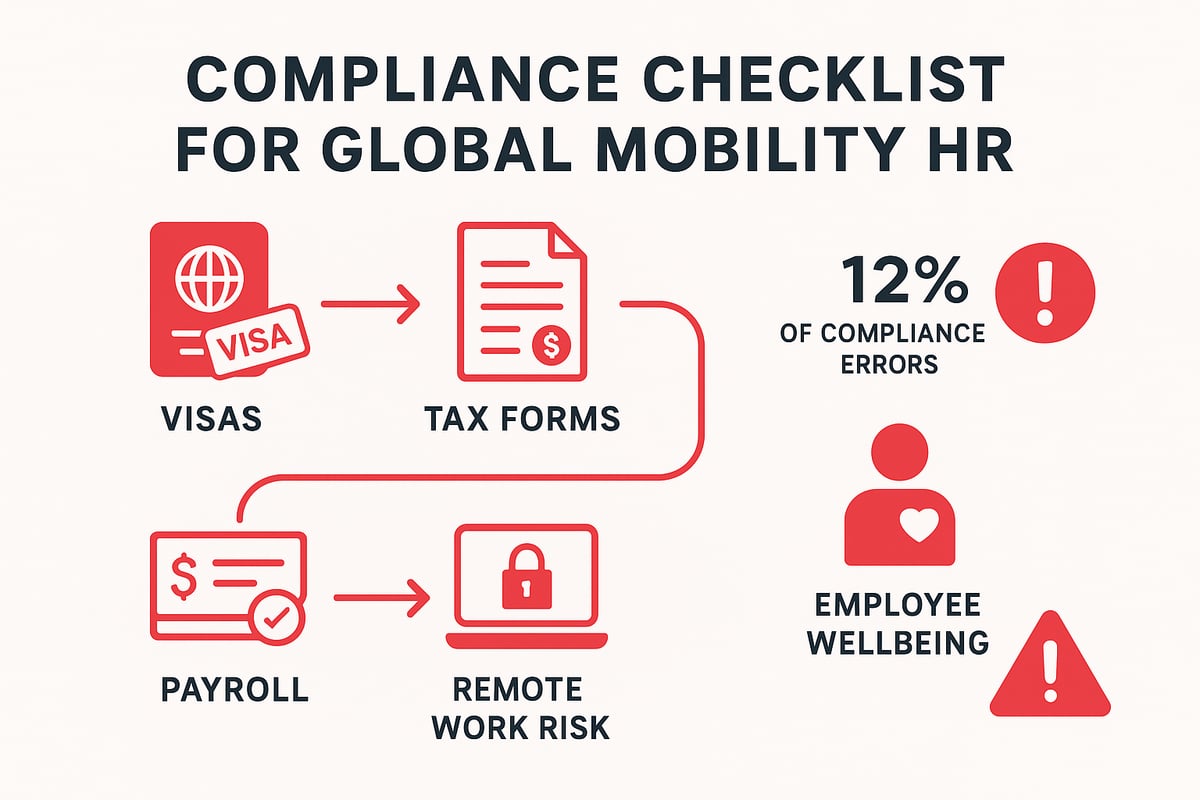
The world of global mobility hr is evolving rapidly, making compliance and legal oversight more crucial than ever. As organizations expand internationally, HR leaders must navigate a maze of rules to protect both the business and its people. At Agile HRO, who we are is defined by our expertise in guiding clients safely through this complexity.
Navigating Global Immigration and Work Permits
In global mobility hr, keeping pace with shifting immigration laws is a daily challenge. Countries frequently update visa requirements, quotas, and permitted work activities. HR teams need robust processes to track these changes and ensure every assignment is compliant.
For example, when geopolitical events disrupt mobility, having rapid response protocols in place is essential. This might involve working closely with legal experts to expedite documentation or renewals for key talent. Agile HRO’s hands-on support makes this process seamless, providing real-time guidance and reducing stress for both HR and employees.
For deeper insight into compliance trends and evolving regulations, explore Policy and Compliance Trends in Global Mobility, which highlights how technology and policy shifts are shaping the future of global mobility hr.
Managing International Taxation and Payroll
Taxation and payroll complexities are among the top concerns in global mobility hr. Each country has unique rules around double taxation, social security contributions, and local payroll practices. Failing to manage these can result in costly penalties and assignment failure.
Best practices include:
- Implementing tax equalization and protection strategies
- Conducting regular payroll audits
- Leveraging automated payroll solutions to minimize errors
According to industry data, payroll errors are the leading compliance risk in cross-border assignments. Agile HRO’s expertise ensures your payroll is always accurate and compliant, giving HR leaders confidence to focus on growth rather than risk.
Permanent Establishment and Remote Work Risks
A major risk in global mobility hr is unintentionally triggering permanent establishment (PE) in new markets. When employees work remotely from countries where your business has no legal presence, you may face unexpected tax liabilities or regulatory scrutiny.
To avoid these issues:
- Draft clear remote work and cross-border policies
- Monitor employee locations and assignment lengths
- Consult with legal experts before launching new work arrangements
A recent example involved a company facing unforeseen tax bills due to remote workers in multiple jurisdictions. Agile HRO’s proactive approach helps your organization stay ahead of such risks, protecting both your business and your talent.
Duty of Care and Employee Wellbeing
Duty of care is central to global mobility hr success. Ensuring the health, safety, and legal protection of mobile employees builds trust and loyalty. This includes providing access to medical support, security resources, and mental health services.
At Agile HRO, we integrate wellbeing protocols into every mobility program. Our focus on duty of care not only keeps employees safe, it enhances satisfaction and retention—key outcomes for any forward-thinking HR leader.
Cultural Integration and Employee Support
Relocating talent is more than just logistics. In 2026, true global mobility hr excellence means supporting employees and their families in every aspect of their move. Building a future-ready global workforce requires empathy, training, and a commitment to wellbeing at every step.
Cross-Cultural Training and Adaptation
Global mobility hr leaders know that cultural preparation sets the tone for success. Pre-departure training, language courses, and local cultural coaching help employees and their families adapt faster. In fact, 90% of successful assignments include comprehensive cultural training before departure.
Employees who understand local customs, workplace etiquette, and societal norms feel more confident abroad. Agile HRO guides organizations through tailored training programs, ensuring talent is prepared for both professional and personal challenges. This proactive approach minimizes culture shock and accelerates integration, giving businesses an edge in global markets.
Family, Spousal, and Child Support Services
A thriving assignment depends on family satisfaction, making this a top priority in global mobility hr strategies. Providing resources for spouse or partner employment, school placement, and community integration ensures families feel supported throughout the transition.
Companies often offer dual-career support, relocation counseling, and local networking opportunities. Data shows that family dissatisfaction is a leading cause of assignment failure, highlighting the value of a holistic approach. Agile HRO partners with clients to deliver tailored family support, helping every family member build a sense of belonging in their new home.
Enhancing Employee Experience and Retention
Continuous support is essential for global mobility hr programs aiming to boost retention. Regular check-ins, mentorship, and feedback loops help employees feel valued and connected. Recognition programs for international assignees can drive engagement and loyalty.
Organizations that prioritize ongoing support see up to 25% higher retention rates. According to the Global Mobility Report 2025 by StartUs Insights, leading companies invest in employee wellbeing to secure long-term success. At Agile HRO, our hands-on guidance and people-first approach empower teams to thrive anywhere, reinforcing our commitment to seamless global mobility.
Measuring Success and Continuous Improvement
Global mobility hr success is not just about moving people across borders, it is about measuring what matters and using those insights to evolve. As organizations expand globally, the ability to track, assess, and refine global mobility hr programs becomes a true competitive edge. Let us dive into how leading companies measure, learn, and future-proof their mobility strategies.
Key Performance Indicators for Global Mobility
Selecting the right KPIs is essential for any global mobility hr program. These metrics help leaders benchmark success, identify risks, and showcase value to stakeholders. Common KPIs include assignment success rates, cost per assignment, compliance incident counts, and employee satisfaction scores. For example, tracking payroll accuracy and compliance incidents is crucial, as highlighted in Global Payroll for Remote Teams.
| KPI | What it Measures |
|---|---|
| Assignment Success Rate | Project completion and retention |
| Cost per Assignment | Financial efficiency |
| Compliance Incidents | Risk and governance |
| Employee Satisfaction | Experience and morale |
Regularly reviewing these KPIs ensures your global mobility hr strategy remains aligned with business goals.
Gathering Feedback and Iterating Programs
Continuous improvement in global mobility hr relies on honest feedback and agile adjustments. After each assignment, collect input from employees and stakeholders through surveys, interviews, or informal check-ins. Analyze this feedback to spot trends, address pain points, and celebrate wins.
Many organizations conduct annual program reviews, using these insights to refine policies, streamline processes, and personalize support. By closing the feedback loop, global mobility hr teams keep their programs relevant and responsive to evolving needs.
Future Trends and Preparing for 2027 and Beyond
Looking ahead, global mobility hr will be shaped by technology, sustainability, and new work models. Expect AI-driven relocation tools, eco-conscious assignment planning, and flexible policies that adapt to rapid change.
Staying agile means building feedback mechanisms and data analytics into your core processes. With a commitment to continuous learning and innovation, your global mobility hr program will be ready for whatever the future brings.
We’ve covered a lot together on what it takes to make global mobility work for your team in 2026—from building flexible policies to supporting employees and their families every step of the way. But every company’s journey is unique, and sometimes the hardest part is knowing where to start or how to navigate the next challenge. If you’re ready to take the first step toward smoother, more human global mobility, why not connect with someone who’s been in the trenches? Let’s talk about your story, your goals, and how we can help you thrive. Book a Consultation

